Interview with Lee Beirne
AI SEO consultant Lee Beirne explains why brokerage listing pages built for browsing fail high-intent buyers, and what AI search demands instead.


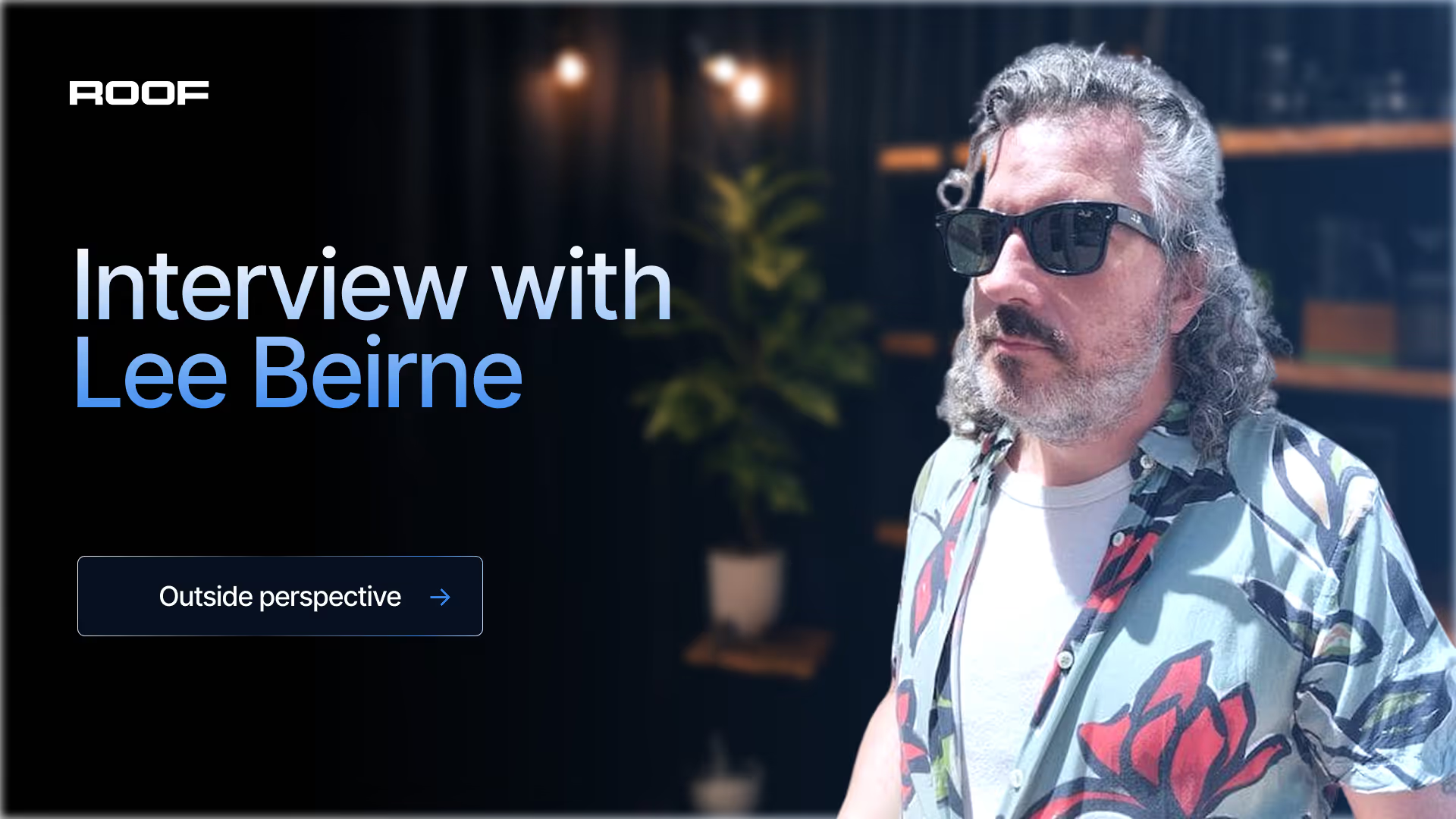
The conversation around real estate website performance tends to stay in familiar territory: better photos, faster load times, cleaner layouts.
All important stuff.
Lee Beirne works in a different part of the problem entirely, however. And his outlook might make you think differently about website performance, too.
Lee is a freelance AI SEO consultant with over two decades of experience working with some of the UK's largest enterprise brands. He specializes in technical search, AI visibility, and the structural decisions that tell you how a page gets found, cited, and gets a user to take action.
He's not a real estate specialist – and that's exactly why his perspective is worth paying attention to.
We reached out to Lee as part of our research into why brokerage listing pages underperform, and specifically what the shift towards AI-driven search means for how those pages need to be built.
He reframes the problem in a way most brokerage leaders haven't considered yet: the design decisions that hurt conversion are increasingly the same ones that hurt visibility.
Check out our interview below:
When it comes to high-intent landing pages, how is AI search changing what actually needs to be on them?
"To get found in the era of Large Language Models, real estate pages must shift from human-readable brochures to machine-ingestible data hubs. Models like Claude and ChatGPT don't care about your beautiful CSS breakpoints; they care about entity density and data purity. If a listing doesn't have deep, comprehensive JSON-LD schema detailing exact property parameters, school zoning, and historical tax data, the AI simply won't cite you as the source. To actually convert that visitor once they arrive, the page has to immediately validate the AI's recommendation. If the AI sent them there because 'this is the best home for a family of four near transit,' that specific validation data needs to be above the fold, not buried beneath a massive hero image."
What's the most common conflict you see between how a page is designed and how a high-value user actually wants to use it?
"The most common conflict is that real estate pages are designed for browsing, but high-value users are there for deal velocity. The industry is obsessed with trapping visitors in an endless carousel of glossy images. But a serious, high-intent buyer isn't just looking for kitchen inspiration – they are actively looking for disqualifiers. They want to know the roof age, the HOA fees, and the neighbourhood price trajectory instantly. When you hide critical, decision-making data behind endless scrolling and 'inspiration' UI, you optimise for time-on-site but completely kill the conversion."
How does a listing page's architecture affect whether a visitor stays and converts?
"A flat site architecture treats every listing equally, which is a conversion killer. Architecture and internal linking must create what I call a 'Semantic Silo.' If a high-intent visitor is looking at a $1M waterfront property, the worst thing you can do is put a 'You May Also Like' widget at the bottom linking to $400k downtown condos. The internal architecture must strictly reinforce the specific user intent, linking them to local waterfront zoning guides, school district data, or historical pricing for that specific street. This keeps the user locked inside a high-intent loop while simultaneously signaling immense entity relevance to search engines and AI agents."
Lee Beirne is a freelance AI SEO consultant based in the UK. You can find his work at leebeirne.com.