Real estate's shift towards customer experience
The real estate tech revolution is here. Discover why brokerages that ignore customer experience fail – and what the winners are doing right.



It started with Salesforce. It's happening in the insurance industry, B2B sales, retail – and now in residential real estate.
A major shift, creating losers but also winners. Here's why it's happening, who it involves, and why you need to join this revolution.
A customer-first experience starts with responsiveness on the website. This study on testing response times of the top 74 brokerages shows why speed is still a major differentiator.
Industry transformation
A technology revolution is happening in the real estate industry at this very moment. And it’s not about new “disruptors” entering the market, although they are getting their piece of the pie (we’ll talk about that later on).
It’s bigger than that – it’s about consumers.
A big power shift that is happening today, dictated by how consumers want to do business.
A major power shift
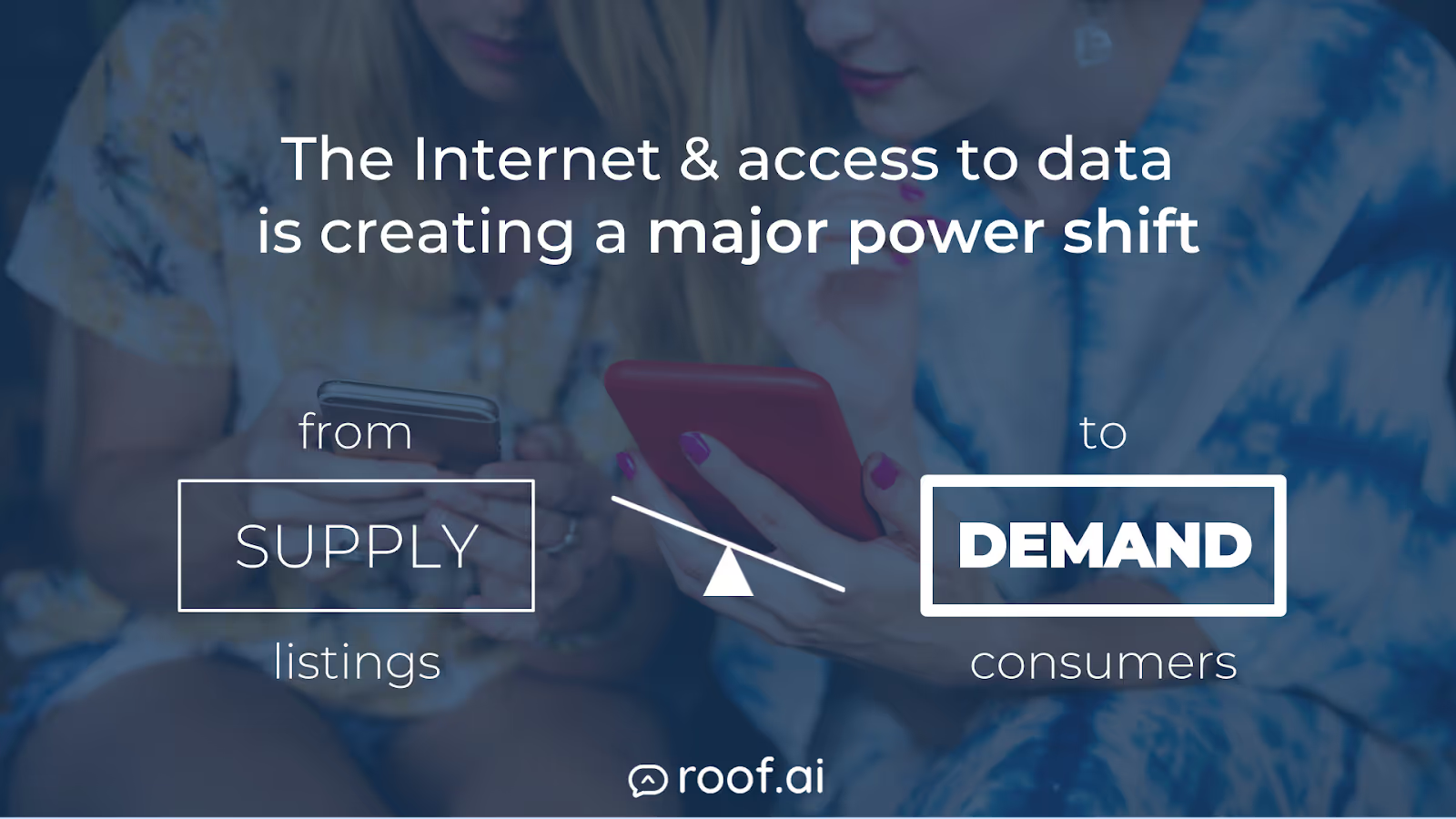
In the old days, power was in the hands of whoever controlled supply. But the Internet changed everything – it gave consumers easy access to data and made supply basically infinite.
“In many ways, the seismic shift in the brokerage business can be summed up in one word: data. Just over a decade ago, the brokerage world was shaken to its core when StreetEasy launched and suddenly gave the public access to listings information that had forever been tightly held by brokerages. That shifted the balance of power from agents to consumers. It also left brokers grappling with how to add value for clients – beyond what they could easily find on their laptops.” (Source)
And it’s the consumer that creates demand.
They buy the products and services companies sell. And today, where competition is fierce and choice is infinite, companies have to really focus on the customer experience to win them over.
With that shift in power, companies now have to adapt to the ways in which consumers want to communicate with each other and with businesses.
And the way people are interacting with businesses today is changing.
The disruptors

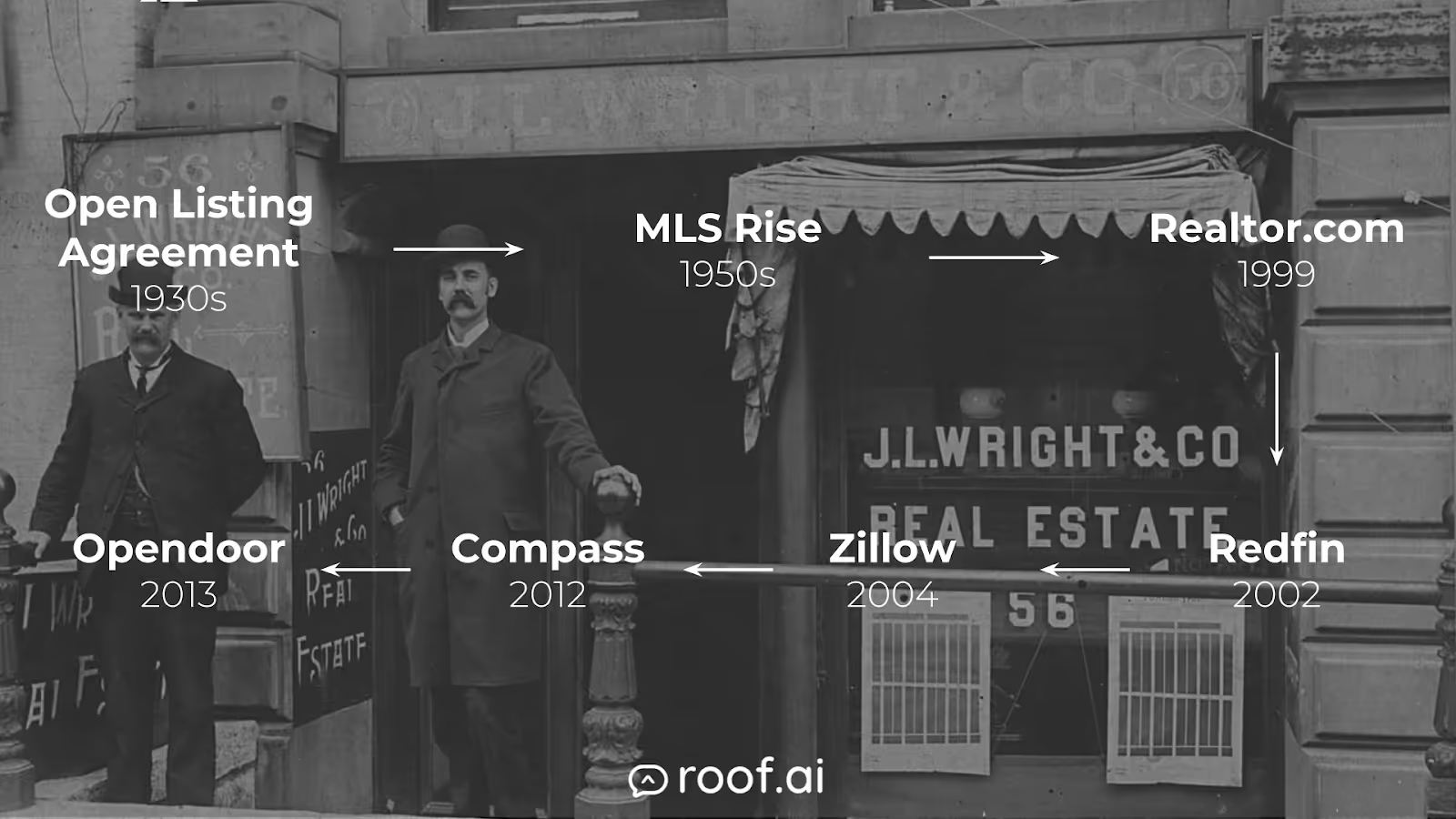
The “disruptors” are the companies that pick up on the changes happening in their industry and change their business models to adapt.
There are too many examples of large, old companies who failed due to their disregard to industry changes that were happening. Think Blackberry, Kodak, Blockbuster, Toys R Us, etc.
Are we seeing the same trend now in real estate, with big companies that are unwilling to change? Maybe.
History shows that disruptors will take the place of the companies that are complacent. And they’re able to do so because they operate with the consumer as their North Star. They’re close to the consumer, and it’s that close proximity that allows them to pick out the trends, adapt, and beat the competition.
The threat is real
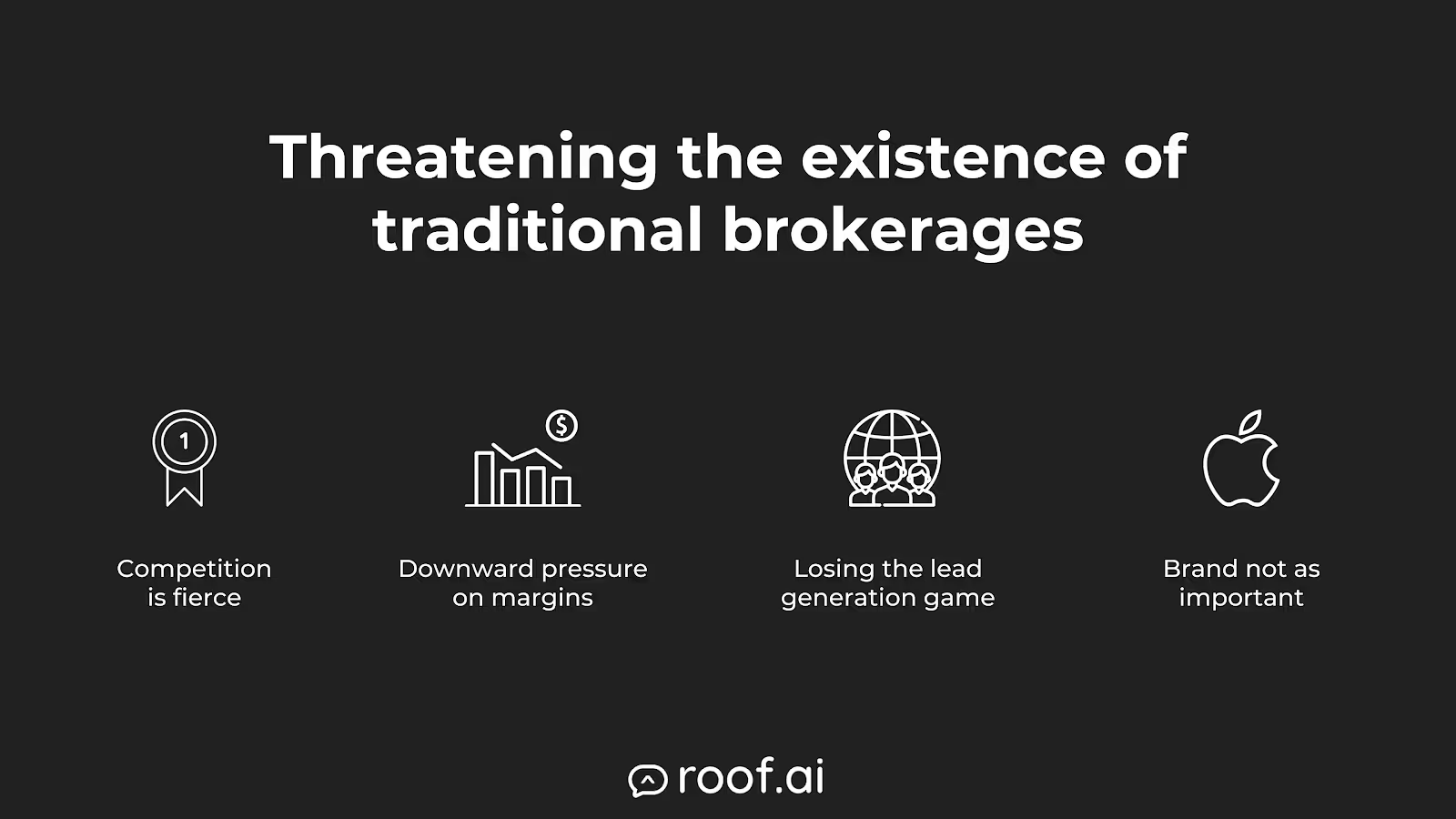
Operating and growing a traditional brokerage today is especially hard for several reasons including:
- Fierce competition: “There is as much unrest in residential brokerage around the country as there has been in my 31 years in the business,” said Steve Murray, founder of real estate data firm Real Trends, who added that companies like Redfin, Zillow, and Compass have fueled a tech arms race and taken competition to a new level. “A multifront war is how the incumbents see it.”
- Downward pressure on margins: According to Murray, the assault is eating into gross margins, the lifeblood of traditional brokerage firms. Even the heads of some top Manhattan firms have acknowledged the precariousness of the business. “It’s very hard for a company to succeed today because of the pressure on margins,” said Hall Willkie, co-president of Brown Harris Stevens. In addition to commissions, his firm is spending heavily on IT, economists, market reports, online advertising and glossy publications.
- Losing out on lead generation: Traditional brokerages have long been focusing on acquiring agents; that’s their business models. In return, they offered agents marketing services, productivity tools, offices, and a brand to operate under. All of which are losing value today because of technology and easy access to better and cheaper similar products. Zillow, on the other hand – although not a brokerage – decided to take one aspect of a real estate agent’s job and perfect it. It was a main piece of the puzzle that agents and brokerages were (and still are) struggling with. They decided to perfect lead generation.
- Brand isn’t as important: “We are not bulls on the long-term importance of brands in residential real estate,” says Anthony Paolone, an analyst at JPMorgan who covers Realogy. Although agents will continue to play an important role in complex transactions, he adds, brokerage firms’ earnings are in flux." That’s a phenomenon called brand agnosticism.
Is the “death of the traditional brokerage” upon us?
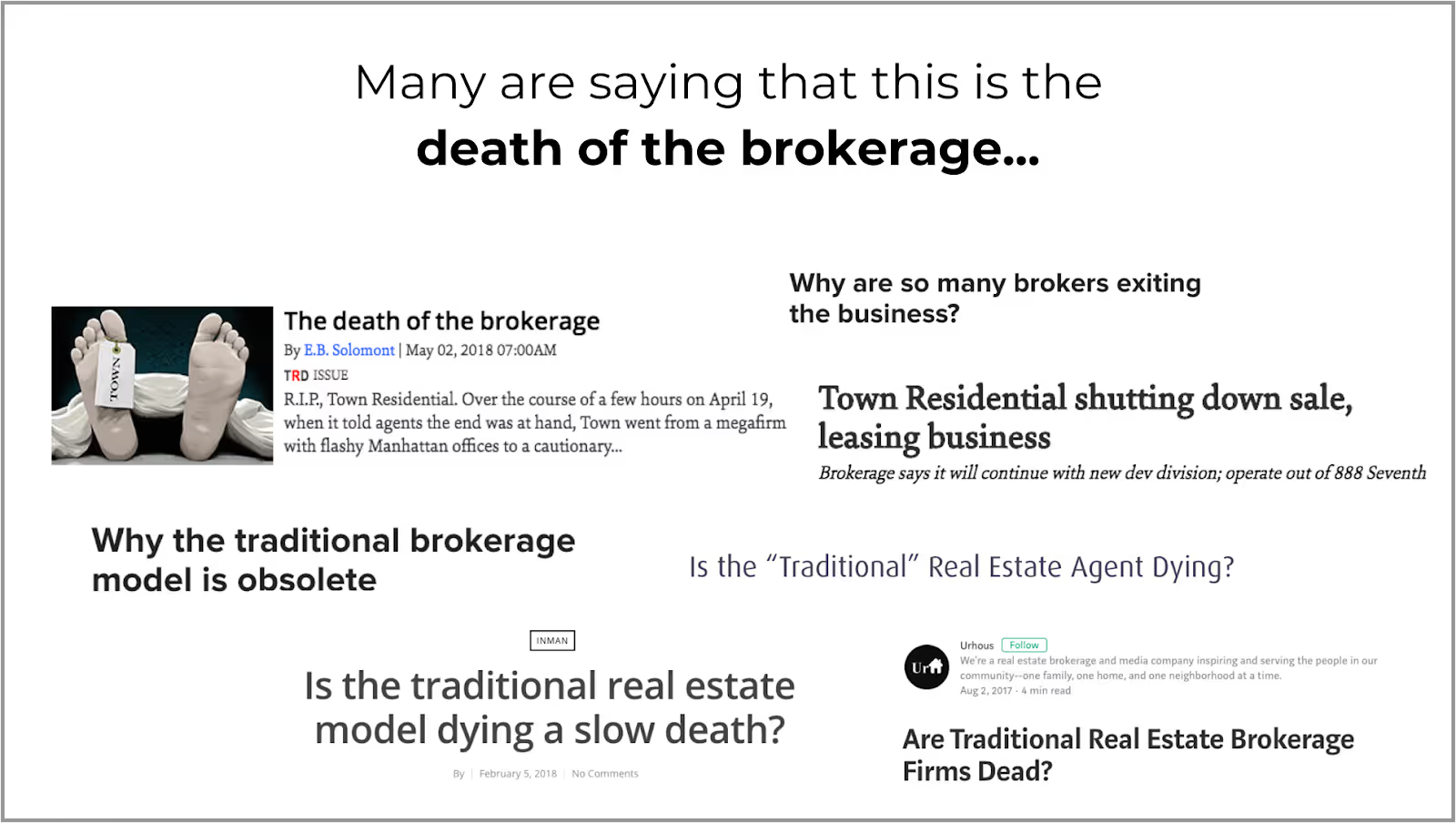

Elliman’s chairman, Howard Lorber, agrees with that, saying “brokerages that don’t invest in tech are toast.”
Leaders are taking action

In 2017, Keller Williams created a $1 billion tech fund and introduced Kelle, their voice assistant, that follows commands like “Kelle, call my buyer.” Founder Gary Keller mentioned that with the help of AI, “you can have a more meaningful conversation with your client.”

When RE/MAX acquired booj, it was an ambitious step forward. They made a bold shift in their technology strategy – a step toward delivering even better tech solutions that create a distinct competitive edge.
Their CEO at the time, Adam Contos, said in a statement: “Our strategy is to serve the industry’s most productive agents by providing technology that saves them time, connects them to buyers and sellers, helps them leverage the brand and its many competitive advantages, and ultimately enables them to be even more productive and successful.”

Realogy spends $200 million a year on tech, according to their CEO Ryan Schneider, who outlined an ambitious path to develop new products. Recently, they’ve moved away from mergers and acquisitions in order to focus on organic growth.
What’s the secret?
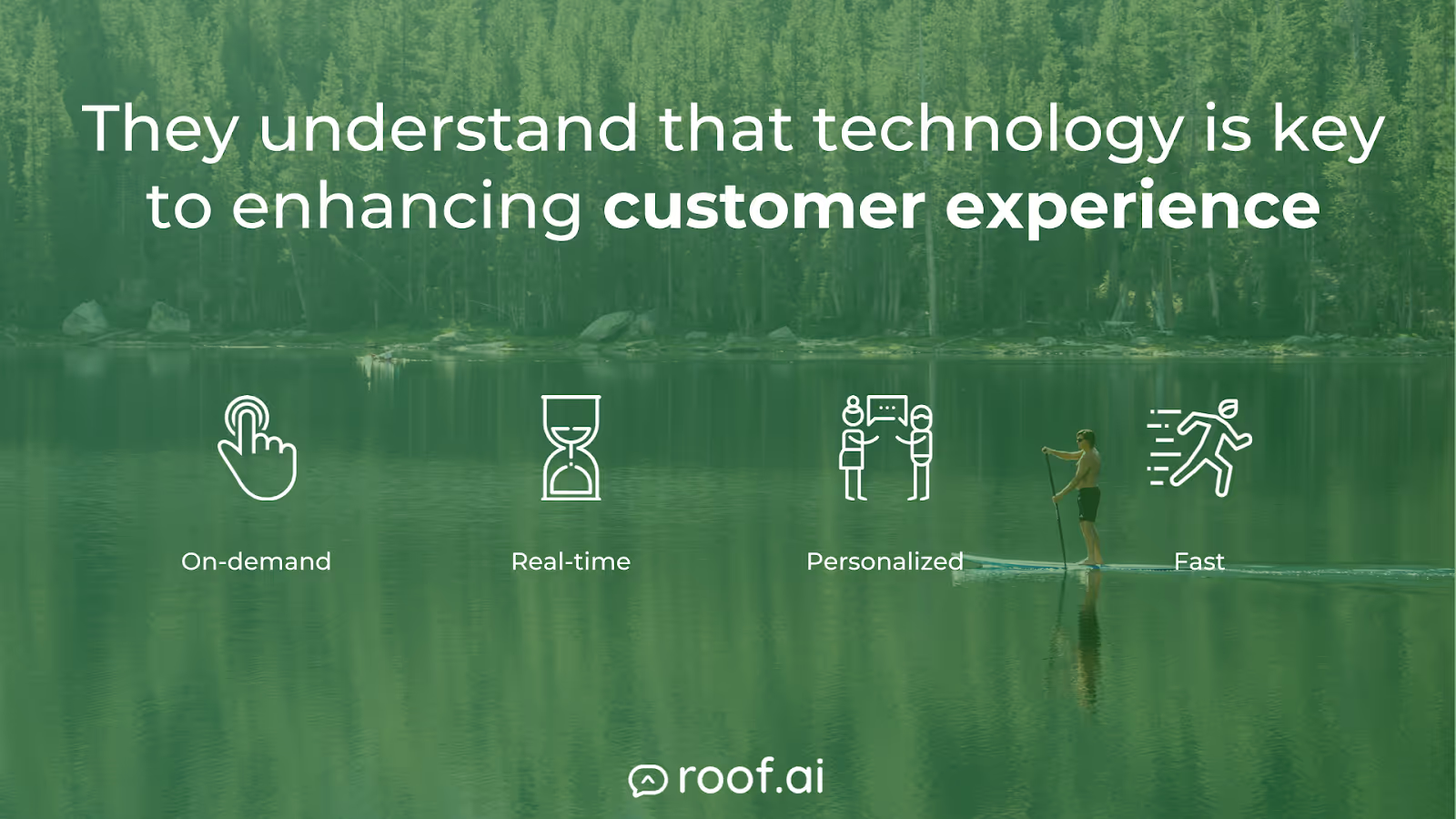
These companies realized that in order to win, they needed to leverage the power of technology in order to improve the customer experience.
Again, in a world with infinite supply, the company with the best customer experience will win. Consumers today want instant and accessible methods to contact businesses. Long gone are the days where a lead has to fill out a form and become a number in some database.
The standards for a good customer experience are changing. Today, consumers want on-demand, real-time, and personalized experiences when dealing with businesses.
Our “why”

We know very well that real estate is all about relationships. That’s why our mission is to help real estate brokerages stay competitive by providing them with the technology needed to build and nurture those relationships while operating efficiently at scale.
And we start with the customer's online experience, and how they want to do business today. We’re helping real estate brokerages leverage the power of data and AI to help them make this first step – the search process – smarter, more efficient, and easier for them and their clients.
Inefficiencies
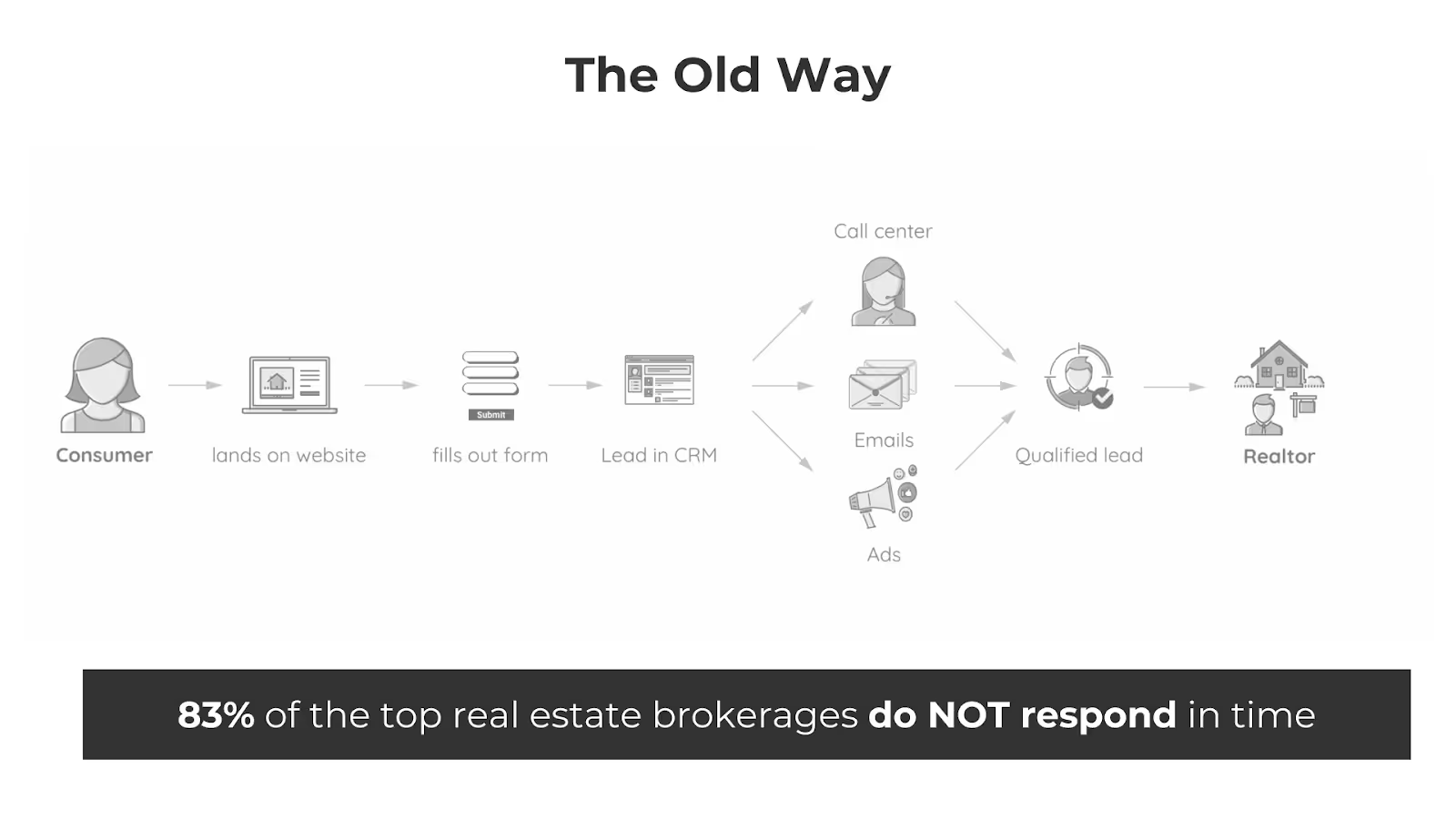
This is how most real estate brokerages capture leads on their website today.
Website visitors submit an inquiry or try to get in contact with the brokerage through a form submission. This lead goes into a CRM and becomes another number in a list of other leads. Then comes the nurturing stage, a barrage of never ending emails and ads that try to convince these leads to either reply to these emails, set up a meeting, answer a phone call, or go back to the website and perform an action.
The question is, why go through all that in the first place if the lead was already on your website?
It's true that some leads need further nurturing – but not all of them. The trick is to be able to separate the ones that do from the ones that don’t. Using bots, you can pre-qualify thousands of requests automatically.
In order to test our claims about this long, inefficient process, we actually performed a study that measured the response time of the top brokerage firms in the U.S.
Shockingly, 83% of the top real estate brokerages did not respond in time, while 40% did not respond at all. In such a competitive market, can you really provide such a delayed experience?
The new real estate buying and selling process is all about the experience
Traditional brokerages are alive and well – the ones that are noticing the new consumer trends and adapting accordingly, at least.
Today’s real estate consumers value experience more than brand alone. They don’t want to wait to talk to a sales rep, or suffer through the endless real estate nurturing maze.
What they want is an experience that feels helpful, authentic, and easy. This experience begins with real-time messaging or chat.
The more focus real estate brokerages put on delivering an outstanding experience through messaging or chat, the greater success they’ll see in converting their website visitors into clients.
When someone lands on your listings, Roof AI helps answer their questions in the moment and turn that interest into a showing request or inquiry. See how it works.